Power Flushing Central Heating System Guide

If your radiators are cold at the bottom, your boiler is noisier than it should be, or the system takes far too long to warm up, sludge is often the reason. Power flushing central heating system pipework and radiators can restore circulation, improve heat output and reduce strain on key components, but it is not something every property needs automatically.
For homeowners, landlords and property managers, the main question is usually simple: is a power flush the right fix, or are you paying for work that will not solve the fault? The answer depends on the age of the system, the symptoms you are seeing and whether the blockage is localised or spread throughout the heating circuit.
What power flushing a central heating system actually does
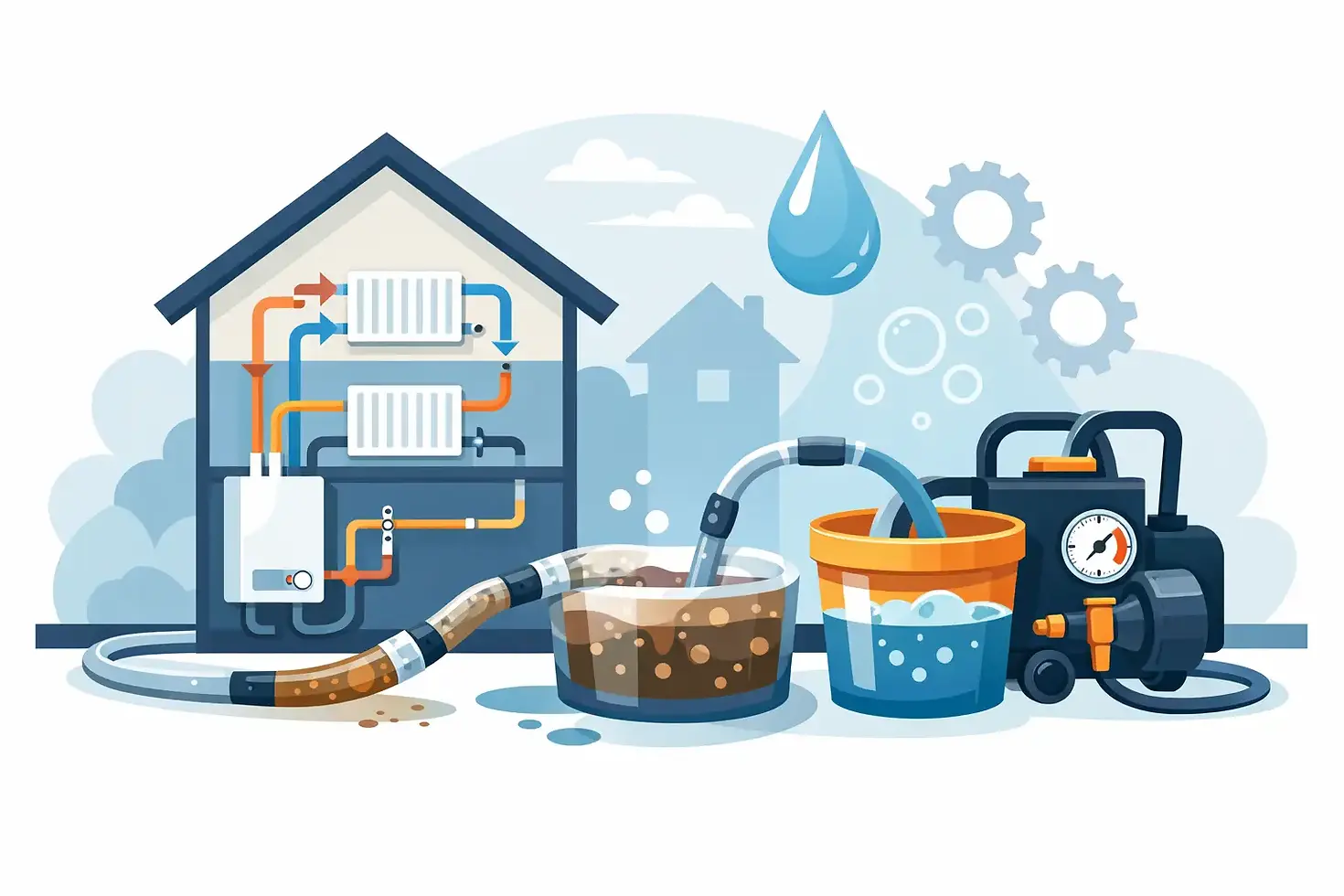
A power flush is a cleaning process carried out on a wet central heating system. A specialist pump is connected to the pipework and sends water and cleaning chemicals through the system at speed to loosen and remove sludge, rust deposits and other debris.
That debris tends to build up gradually inside radiators, valves and pipe runs. Over time, circulation suffers. Some radiators heat unevenly, the pump works harder, and the boiler may cycle poorly or overheat. In more serious cases, the system starts breaking down repeatedly because contaminated water is affecting internal parts.
The purpose of power flushing is not to make an old heating system brand new. It is to remove contamination so the system can circulate properly again and operate more efficiently. If components are already badly damaged, they may still need repair or replacement after the flush.
Signs you may need power flushing central heating system pipework
There are a few warning signs engineers see regularly. Cold spots on radiators, especially along the bottom, are one of the most common. Black water when a radiator is bled is another clear indicator that sludge is present.
You may also notice persistent boiler noise, slow warm-up times, radiators that need frequent bleeding, or some rooms staying cold even when the heating is on for long periods. In rental properties and commercial premises, inconsistent heating across different parts of the building is often the first complaint.
That said, not every heating fault points to a full power flush. A failed pump, stuck motorised valve, airlock, balancing issue or faulty thermostat can produce similar symptoms. That is why proper diagnosis matters before any cleaning work is recommended.
When a power flush is worth doing
A power flush is often worthwhile before fitting a new boiler onto an older system with contaminated water. Many boiler manufacturers expect the system to be properly cleaned before installation, as dirty water can quickly affect the new appliance and shorten its working life.
It can also make sense where several radiators are underperforming, the system has a known sludge problem, or repeated component failures suggest ongoing contamination. In these cases, cleaning the system addresses the wider cause rather than just replacing one affected part at a time.
For landlords, this can be especially practical where heating performance has declined across a property and tenants are reporting recurring issues. For businesses, reduced downtime and more consistent heating can justify the work if the system condition supports it.
When it may not be the right answer
There are also situations where power flushing is not the best route. If only one radiator is not heating, the problem may be a blocked valve or local restriction rather than system-wide sludge. If pipework is heavily corroded or very old, aggressive cleaning needs to be considered carefully, as weak areas may begin to leak once deposits are removed.
In some properties, a targeted chemical flush or sectional repair is more suitable. In others, particularly where the system is in poor general condition, major remedial work or partial replacement may offer better value than trying to clean around multiple failing components.
A reliable engineer should explain that trade-off clearly. Power flushing can be effective, but it should match the condition of the system rather than be sold as the answer to every heating problem.
How the process usually works
The exact method varies by system layout, but the general process is straightforward. An engineer isolates the heating circuit, connects a power flushing pump and circulates water and cleaning chemicals through the radiators and pipework.
Individual radiators are usually worked through in turn so deposits can be loosened and discharged. In some cases, vibration tools are used on the radiator panels to help free stubborn sludge. The water is monitored as the process continues, and the aim is to flush out contamination until it runs clear.
Once cleaning is complete, the system is refilled with fresh water and an inhibitor is added. This chemical helps reduce future corrosion and sludge formation. Without inhibitor, the system is more likely to end up back in the same condition.
A magnetic filter may also be recommended, especially where a boiler is being protected from ongoing debris. This can help catch circulating magnetite before it reaches sensitive parts.
How long power flushing takes
For an average domestic property, power flushing often takes most of a day. Larger homes, older systems or properties with multiple heating zones can take longer. Commercial premises and larger residential blocks may need a more staged approach depending on access, system size and occupancy.
Time depends on how contaminated the system is and whether individual radiators are badly restricted. If the engineer discovers failed valves, seized bleed points or damaged radiators along the way, that can also add time because those issues may need attention before the system can be recommissioned properly.
What it costs and what affects the price
The cost of a power flush depends mainly on system size, number of radiators, access, and the extent of contamination. A straightforward flush on a smaller domestic system will generally cost less than work on a larger property with several floors, older pipework or difficult access.
If replacement parts are needed, such as radiator valves, pump fittings or a magnetic filter, that will increase the total. The same applies where the engineer finds that some radiators are too blocked or too corroded to recover fully.
The sensible way to look at cost is against what you are trying to prevent. If contaminated water is affecting boiler performance, reducing efficiency and causing repeated call-outs, then a properly justified flush can save money over time. If the issue is isolated and simple, a smaller repair may be the better value option.
Why diagnosis matters before booking the work
Good heating engineers do not start with the flush. They start with the fault. That means checking water condition, radiator performance, boiler behaviour and system circulation before recommending major cleaning.
This is particularly important in London, Surrey and Buckinghamshire properties where system age and layout can vary widely. A newer combi boiler in a modern flat may have very different needs from a larger older house with legacy pipework and an open-vented system.
At T&M Heating and Plumbing Ltd, the practical approach is the right one: identify the cause, explain the options and carry out the work that actually fits the system. That is better for performance, better for cost control and better for long-term reliability.
How to keep the system cleaner after a flush
A power flush is not the end of the job if you want lasting results. The system should be dosed with inhibitor afterwards, and it is worth checking that inhibitor levels are maintained over time, especially after draining down for other repairs.
Annual boiler servicing also helps because circulation issues and early signs of contamination can be picked up before they turn into bigger faults. If a magnetic filter is fitted, it should be cleaned as part of routine maintenance.
If radiators begin developing cold spots again within a short period, or the boiler starts making unusual noises, it is worth getting the system checked sooner rather than later. Repeated sludge build-up usually points to an underlying issue such as poor water treatment, ongoing corrosion or a system that was only partly cleaned.
Power flushing central heating system components can make a clear difference when contamination is the real problem. The key is not to treat it as a standard upsell. The right cleaning work, carried out for the right reason, gives you a warmer property, a more efficient system and fewer avoidable heating faults when you need reliability most.


Comments