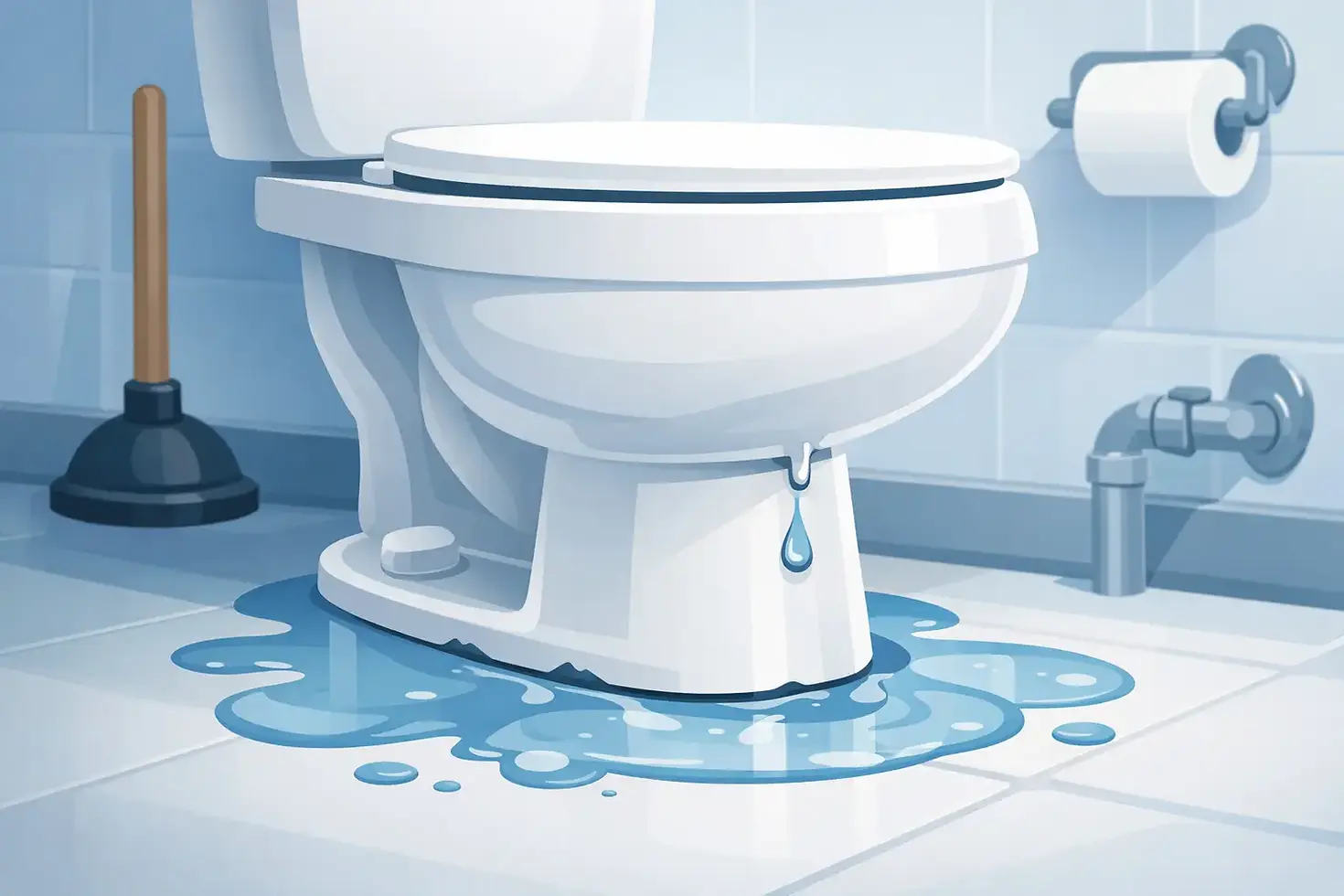
Toilet Leaking From Base? What It Means

A toilet leaking from base is rarely just a nuisance on the floor. In many cases, it points to a failed seal, loose fixings or movement in the pan, and the longer it is left, the greater the risk of damage to flooring, subfloors and ceilings below. If the leak is near a bathroom wall or on an upper floor, quick action matters.
The first step is simple. Dry the area fully, place a few sheets of tissue around the base, then flush once and watch carefully. That helps confirm whether water is escaping from the toilet itself, running down from the cistern, or coming from a nearby pipe or bath seal and collecting around the pan.
Why a toilet leaking from base happens
The most common cause is a failed pan connector seal or wax-style sealing point where the toilet meets the waste outlet. Modern UK installations often use rubber seals and pan connectors rather than traditional wax rings, but the principle is the same. If that seal shifts, perishes or was not fitted correctly, waste water can escape during a flush.
Another frequent issue is movement in the toilet pan. Toilets should sit firmly on the floor. If the pan rocks even slightly, repeated movement can break the seal over time. This can happen after poor installation, loose floor fixings, damaged flooring or general wear in a busy household or commercial washroom.
Sometimes the leak is not from the base at all, even though that is where the water appears. Condensation on the cistern, a leaking inlet valve, a cracked pan, or a small drip from the flush pipe can all track down and pool at floor level. That is why proper diagnosis comes before repair.
What to check before you assume the worst
Start with the easiest visual checks. Look behind the toilet for any sign of water around the inlet pipe, isolation valve or flexible hose. Then inspect the cistern to pan bolts if you have a close-coupled toilet. If those seals fail, clean water can run down the back or sides of the pan and settle at the base.
Next, check whether the leak only appears when you flush. If it does, the problem is more likely to be linked to the waste side, flush connection or pan seal. If the floor is wet all the time, even when the toilet has not been used, the source may be a supply pipe, condensation issue or another bathroom fitting nearby.
Take note of the type of water as well. Clean water suggests a supply-side leak or condensation. Dirty water points more strongly to a failed waste seal, which needs prompt attention for hygiene reasons. In a rental property or business premises, that distinction matters because it affects urgency, cleaning requirements and the risk to occupants.
Can you keep using the toilet?
It depends on the cause and the amount of leakage, but caution is sensible. If water is seeping out only during flushing, every use may be sending contaminated water beneath the floor covering or into the ceiling void below. In that situation, it is best to stop using the toilet until it has been inspected.
If the issue turns out to be light condensation or a minor cistern drip, the risk is lower, but the symptom still needs dealing with properly. Small leaks have a habit of becoming larger ones, especially where fixings loosen further or trapped moisture starts to affect timber floors.
For households with one WC, this can be inconvenient. For landlords, property managers and commercial sites, it can become a complaint, a hygiene issue or a preventable repair bill. Acting early is usually the cheaper option.
Common faults behind a toilet leaking from base
A failed pan seal is high on the list, but it is not the only fault a plumber will consider. On a close-coupled toilet, the doughnut washer between cistern and pan can leak when flushed. Because the water runs downward, it can look like the base is the problem when the real fault is higher up.
Loose or overtightened fixings can also create problems. If the pan fixing screws have worked loose, the toilet may shift and strain the connector. If they have been overtightened, particularly on older ceramics, there is a risk of hairline cracking. Cracks can be difficult to spot and may only leak under load or during a flush.
The floor beneath the toilet also matters. If vinyl, laminate or tiled flooring has been fitted around an uneven surface, the pan may never have been fully stable. In older properties, previous moisture damage can soften the floor and allow movement that keeps returning even after a basic reseal.
Why quick fixes often fail
It is tempting to run a bead of sanitary sealant around the toilet base and hope for the best. That may hide the symptom for a short time, but it does not address the underlying fault. In some cases, it makes diagnosis harder by trapping water beneath the pan and delaying visible signs of a leak.
A proper repair usually means removing the toilet, checking the pan connector, replacing failed seals, inspecting the floor and refitting the pan so it sits level and secure. If the toilet has been leaking for some time, the repair may also involve drying, cleaning and assessing the condition of nearby materials.
This is where experience matters. What looks like a simple seal replacement can turn into a wider job if the outlet is misaligned, the flooring has dropped, or the pan itself is damaged. A dependable plumber should explain that clearly rather than apply a temporary patch and leave you with the same problem a few weeks later.
What a professional repair normally involves
A proper visit starts with identifying the source of the leak rather than guessing. The plumber will usually check the cistern connections, water supply, pan stability and waste outlet. If removal is needed, the toilet is lifted carefully so the connector and sealing surfaces can be inspected.
If the pan connector or seal has failed, it will normally be replaced rather than reused. The pan is then refitted with attention to alignment and stability. If the floor fixing points are poor, these may need improvement so the toilet does not rock after the repair.
Where there is evidence of ongoing water exposure, the surrounding area should be checked for hidden damage. On timber floors, that can include swelling, staining or softness around the fixing points. In a downstairs cloakroom or first-floor bathroom, it may also be worth checking the ceiling below for signs of water tracking through.
When the issue is urgent
A leaking toilet becomes more urgent if dirty water is escaping, if the property has only one WC, or if there is any sign of water reaching adjacent rooms or ceilings. The same applies where vulnerable occupants, tenants or customers are affected. Hygiene and access matter as much as the plumbing fault itself.
Commercial premises and rented properties often need a faster response because delays can disrupt staff, visitors or tenants. Clear communication is important here. If a toilet needs to be taken out of use, that should be made plain straight away so no one makes the damage worse by continuing to flush it.
For homeowners, the urgency often depends on location. A small leak in a ground-floor WC is one thing. A leaking toilet over a kitchen ceiling is quite another.
Preventing the same problem again
The best prevention is a stable installation and early attention to small signs of trouble. If a toilet rocks, even slightly, it should be dealt with before the seal fails. If you notice staining around the base, a musty smell, loose fixings or water after flushing, arrange an inspection before the flooring is affected.
It also helps to be careful with what goes into the toilet. Excessive paper and unsuitable items can contribute to pressure and poor flushing, which can expose weaknesses in an already compromised waste connection. That is not always the root cause, but it can make a marginal installation fail sooner.
If you manage multiple properties, periodic checks are worthwhile, especially after tenant changeovers or other bathroom works. Toilets are often disturbed during flooring, decorating or refits, and small alignment issues do not always show up immediately.
At T&M Heating and Plumbing Ltd, this type of fault is approached in the same way as any other plumbing issue - diagnose it properly, make the repair sound, and avoid leaving customers with a temporary fix that turns into repeat damage. If your toilet is leaking at the base, treat it as a repair worth doing properly, not a mess to seal over.


A toilet leaking from the base usually points to a worn-out wax seal, loose mounting bolts, or a cracked toilet base, and it’s something that should be fixed quickly to avoid water damage and unpleasant odors. In situations like this, it’s best to get a professional inspection rather than just wiping up the leak, because the real issue is often hidden beneath the toilet. For reliable help, you can consider Ps Handyman Singapore, as they provide practical handyman services to diagnose and fix toilet base leaks properly, ensuring the repair is done securely and prevents the problem from coming back.